
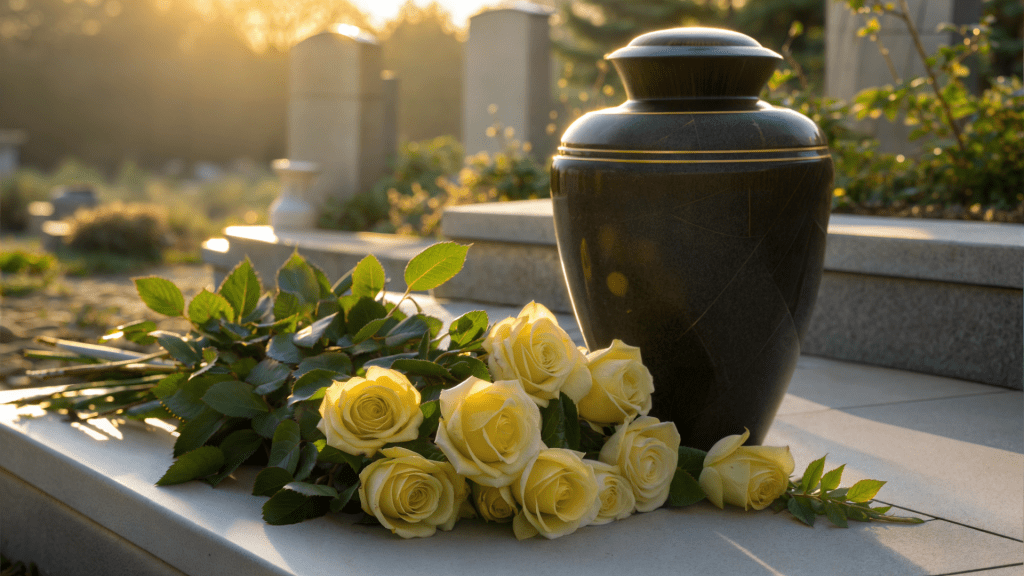
It was eleven o’clock at night when my mom texted my brother, sister, and me.
“Grandma’s gone,” she said.
I was in the middle of watching the fourth episode of the second season of the documentary “Planet Earth.” It felt fitting. The acclaimed documentary is a living, breathing expression of the beauty of life and the tragedy of death. It’s a story about how some creatures are forced to live life with a bad hand – whether that’s struggling through the desert, being chronically preyed on, or having the sole purpose of life just being to find ways to keep living.
My grandmother, Patricia Severson, was 87 years old when she died of natural causes. She did not die of loneliness in the middle of a cold room of an old folks’ home. She did not die kicking and screaming, begging for things to take back. She did not fall victim to a ravenous disease.
She died of life.
***
I was the last stop on the bus route.
I always started toward the back of the bus and ended near the front. The bus driver, a nice woman whose name I wish I remembered, would talk to me about Pokémon and other childish things. The trip was always a good one.
I lived only four walking minutes from my house. However, every day after school, I would hop onto the bus, take the long trip around the neighborhood, only to be dropped off at my grandma’s house.
Notice I said “grandma’s” house.
History is always funny.
I was in fifth grade, and looking back, I don’t remember putting up a fight about having to go over to Grandma’s house. Even though I was a quick sprint from my own house, I enjoyed going over there. There were three visible benefits.
She had cable.
She had better food.
She pampered me.
I have so few memories from elementary school. Even though I spent entire years in their classes, I don’t remember the names of my fourth- and fifth-grade teachers. I do remember playing kickball at recess, I remember making a replica of Fenway Park for a project in sixth grade, and I remember Grandma’s house.
I remember lying on the carpet in front of the TV, watching a marathon of cartoons – “Garfield and Friends” was a staple. I remember telling her how I like to eat lemons and, while she may have been laughing in the kitchen preparing it, she brought out the sliced lemon and the juice in the same dish day after day, asking if everything was all right.
I remember eating pickles and ice cream and her and my mother snickering about it – my elementary school brain having no idea that my diet was the same as a pregnant woman’s.
I did that routine for maybe an hour or two a day. I went to school for around seven hours a day. Still, I only remember Grandma’s house.
***
My grandpa spent time in the military during World War II.
He bragged about the time Dwight D. Eisenhower, rock-star general and future President, strolled through his camp.
My grandpa was, as Tom Brokaw’s book claimed and as the catchy slogan that followed, a part of the Greatest Generation. They were heroes. They were men to be admired and men that all should aspire to be.
That may be true for many of the men who fought in Europe or in the South Pacific.
However, he was part of a generation – hopefully, a small percentage of it – that took control of his household to an unhealthy degree. At one point, he bought a car that he felt was too big for my grandma to drive.
In his warped mind, he decided to ban her from driving.
Patricia Severson’s greatest strength was her greatest weakness – her sweetness. She was the dictionary definition of a sweet, old grandma. She was the polar opposite of my other grandma, who partied and married a turnstile of men. They were both extremes.
The one moment that I remember that showed off Patricia’s too-much kindness came on a day that should have been a great one for her.
***
It was 1997, and she and her husband were celebrating their 50th anniversary. For any family, it should have been a moment of pure celebration.
We gathered around a popular German restaurant with all of our family. There was my intermediate family – my mom, dad, brother, sister and me – and my aunt (their daughter) and cousin (their niece). Also, joining us was our family from Seattle – my uncle, Steve (their son) and his wife and, I want to say five (?) kids.
We were eating fondue and laughing and having a good time when my grandpa gave a five-dollar bill to one of my (five?) cousins to tip the accordion player.
Then came the he-said, he-said that changed the family.
I was maybe nine, so I don’t remember, but the legend has it that my grandpa claimed that my cousin just pocketed the five bucks. My cousin’s family claimed otherwise.
One thing led to another and that side of the family was banished forever by my grandpa.
My grandma, simply trying to enjoy her 50th anniversary, was told she could never see her son (Steve) and her grandchildren again.
And we didn’t.
That’s the last memory I ever have of seeing that side of the family. My grandfather, the patriarch who dominated his household like a dictator that he helped fight against in World War II, had laid down the law.
Decades later, my dad helped organize a secret train ride for my grandma up to Seattle. She would go up to see that side of the family before heading back down to Portland.
It was the only way she could see her eldest son.
***
This past summer, my girlfriend and I flew back to Portland so that I could show her around.
I took her to all the usual spots a visitor to the Northwest should see.
There was a trip to Voodoo Doughnuts, the Japanese Gardens, and the Oregon Coast. I took her to see the bums downtown, on a trip to the gorge, and to Burgerville.
However, there was one stop that was most important.
It was a sunny day and I took her back to my home where my grandma was sitting comfortably on a chair outside. A tree by the front door provided my grandma with shade. The five of us sat in the summer weather – me, my girlfriend, my grandma, my mom and dad.
We faced the same problem that I had always faced: what do we talk about?
What do you talk about to a woman who had been domineered her entire life? We talked about the weather. We talked about my parents’ dogs. We talked about how my girlfriend was an elementary teacher.
However, you could see it in my grandma’s eyes, despite the smile that seemed to be tattooed across her face: she wouldn’t remember any of it.
She wouldn’t see her youngest grandchild get married. More than likely, her brain was so ravished that she wouldn’t remember meeting her youngest grandchild’s longtime girlfriend.
I hoped.
Sure, I hoped.
I hoped she would remember, but I knew old age had likely robbed her of that memory.
However, that didn’t matter.
It didn’t matter that she wouldn’t remember. It didn’t matter she wouldn’t remember the sun. It didn’t matter that she wouldn’t remember the dogs running around or the wind blowing. It didn’t matter that she wouldn’t remember her youngest grandchild and his girlfriend smiling and talking about how lovely it was outside.
I knew for that moment, she was happy. She had lived a long life and she deserved that slight moment of bliss.
***
I was sitting at work earlier this month, fumbling through papers, when a message came up on Facebook.
It was my mom.
“Hey do you have access to skype G’ma is in pretty bad shape but she is up right now. Could be a good time to talk to her for just a couple of minutes.”
This was it.
After figuring out my sign-in for Skype on my phone, I rushed to an empty conference room and called. My mom picked up and my grandma was in the background, saddled to a wheelchair. The conversation was dominated by my mother and me – I hoped just hearing my voice would help my grandma – and every so often I’d throw questions toward my grandma.
It was obvious my grandma was nearing the finish line.
We talked for maybe seven minutes, my grandma mostly staring out the window toward the squirrels that grouped together on the porch, before it was time to say our goodbyes.
“Okay, Grandma,” I said, unsure if they would be my last words to the woman who gave me lemons, pickles, and ice cream while I watched cartoons. “You stay out of trouble, okay?”
She waved toward the camera.
I have to believe she had no idea what she was waving at or where to talk.
“You stay out of trouble too, Jesse,” she smiled.
“I love you, Grandma, very much.”
“I love you, too, very much.”
My mother waved and turned off Skype.
It’s the last time that I saw my grandma alive.
***
Living in the news industry, I am surrounded by stories of people who have died too soon. There are fires, car accidents, and murders.
Patricia Severson, who spent most of her life as a citizen under a dictator, had seen plenty in her 87 years. She saw children create grandchildren. She saw grandchildren create great-grandchildren. In the end, in her last breath, she was with my dad and my mom – not a caretaker whose job it is to be around dying people.
She will be buried up on the hill from where she lived, in the military cemetery that currently holds my grandpa. For the first time in a long time, she can finally rest.
She will be buried with a tombstone next to the man who controlled her. He was the man who spent his entire marriage figuratively on top of her, making sure she kept to his every wish and demand.
The good part?
She’s being buried on top of him.
Sometimes life has a way of working itself out.
 Jesse Severson